In Anaheim Hills, the View Sells the Showing. The Retaining Wall Sells the House.
September 18, 2026
September 18, 2026
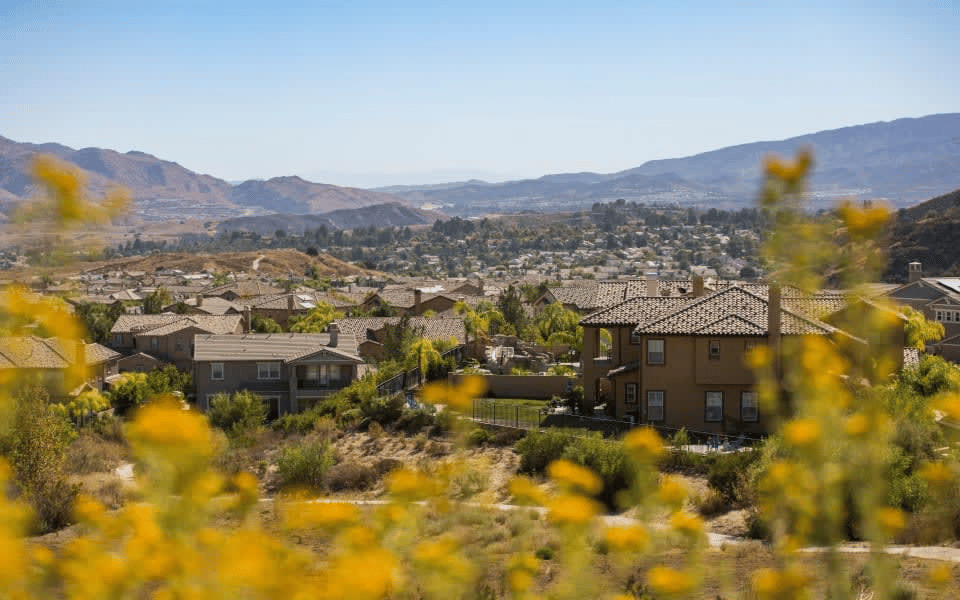
Two homes go on the market the same week, both on ridgeline streets, both with the kind of canyon-to-city-lights outlook that photographs beautifully at twilight. One closes in three weeks at full price. The other sits, gets a price cut, and closes forty-plus days later with a credit back to the buyer. The difference wasn't the view. It was what the buyer's inspector found behind the retaining wall.
That's the part of an Anaheim Hills sale that doesn't show up in the listing photos, and it's the part most guides to this market skip entirely. They'll tell you the median price. They won't tell you what actually determines whether a hillside home closes clean or closes bruised.
Anaheim Hills homes carry a real premium over the rest of the city, and the gap is wide enough to matter. In the three months ending June 2026, the median sale price in Anaheim Hills was $1.1 million, according to Redfin, with a median of $579 per square foot and homes typically going under contract in about 33 days. Compare that to Anaheim as a whole, where the trailing six-month median closing price sat at $912,000 as of August 2026, based on hundreds of tracked closings across the city. Buyers are paying roughly $200,000 more, on average, to be in the hills rather than the flats.
Other trackers place the number anywhere from $1.03 million to $1.15 million depending on methodology and time window, which is normal for a market this small and this sensitive to which handful of homes closed that month. What doesn't move is the reason for the gap between the hills and the flats: elevation, lot position, and view.
But here's the part that changes how a seller should think about that premium. It isn't guaranteed by the address. It has to survive an inspection.
Most of Anaheim Hills was built into the terrain during the 1970s, 1980s, and 1990s, which means the homes sit on graded pads held in place by engineered slopes, retaining walls, and drainage systems designed decades ago for soil and grading conditions that were never going to stay static. A flatland tract home in Anaheim gets inspected for roof, electrical, and plumbing. A hillside home in Anaheim Hills gets all of that, plus a second layer entirely: the condition of the ground it's sitting on.
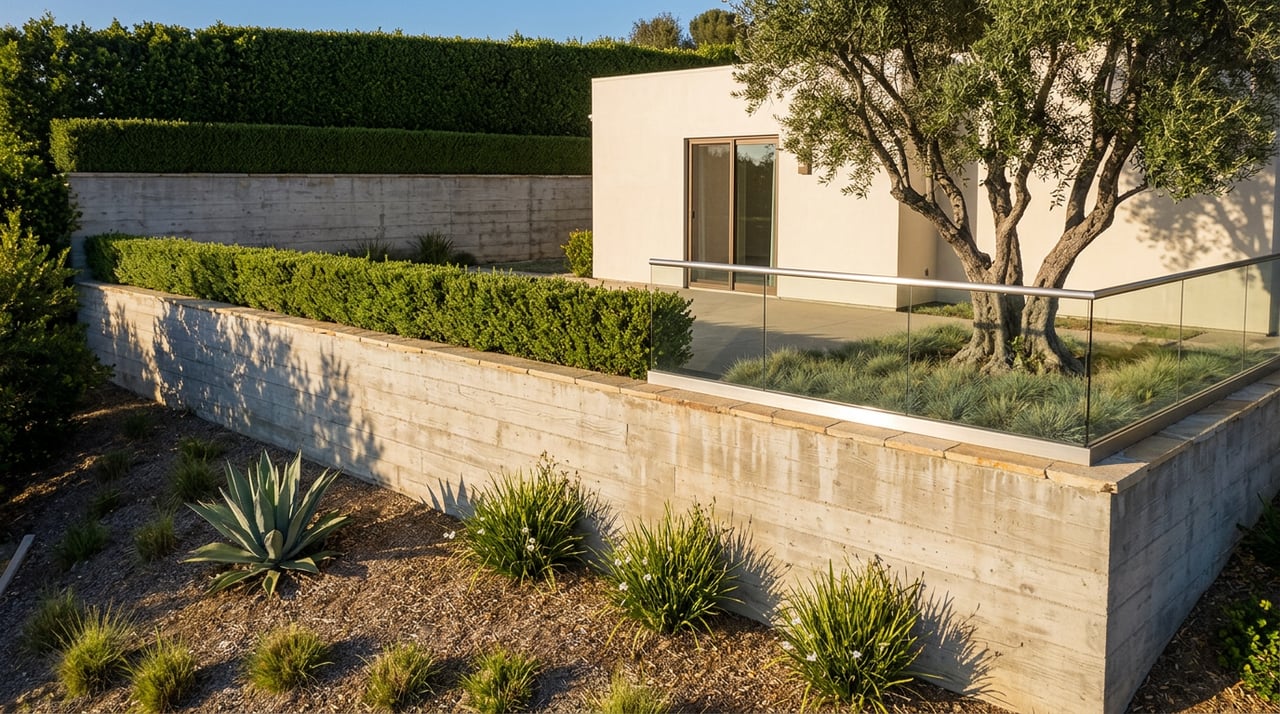
Buyers' inspectors in communities like Copa de Oro, Peralta Hills, and Hidden Canyon look closely at slope erosion, retaining wall cracks, inadequate drainage, and hillside settlement, because those are the failure points specific to graded hillside construction. A flatland home doesn't have a retaining wall to crack. These do.
Layer on the age of the housing stock and the inspection list grows. Homes in the 30-to-50-year range commonly carry original polybutylene or galvanized plumbing, aging electrical panels, and HVAC systems well past their expected service life. None of that is unique to the hills. The slope and wall condition is.
Here's where the math gets concrete. A standard home inspection in Orange County runs $400 to $700 for most single-family homes, with 1,500-to-2,000-square-foot properties typically landing in the $500-to-$600 range. That's before the specialty items a hillside seller should budget separately:
Pre-listing item | Typical cost | What it's checking |
|---|---|---|
General home inspection | $400 to $700 | Roof, electrical, HVAC age, overall condition |
Termite (wood-destroying pest) | $75 to $150 | Active infestation, wood damage |
Sewer scope | $150 to $300 | Line breaks, root intrusion |
Chimney inspection | $150 to $250 | Structural and venting condition |
Slope and retaining wall evaluation | Priced separately by scope | Wall cracks, drainage, hillside settlement |
That last line item is the one flatland guides never mention, because flatland homes don't need it. Hillside sellers do.
The reason to get this done before listing, rather than letting the buyer's inspector find it during escrow, comes down to California disclosure law. Once a pre-listing inspection reveals an issue, that issue becomes a known material fact and must be disclosed on the Transfer Disclosure Statement. Sellers sometimes read that as a reason to skip the pre-listing inspection altogether. It's the opposite. A documented, professionally assessed slope or wall condition, addressed or priced into the listing up front, gives a buyer far less room to negotiate than the same issue surfacing cold during their own inspection period, with their own contractor's number attached to it and no context.
Guard-gated enclaves like Summit Pointe, Belsomet, and Hidden Canyon have long anchored the top of the Anaheim Hills market, where estate-sized lots and unobstructed canyon or city-light views justify the highest per-square-foot numbers in the neighborhood. But the premium a specific home commands isn't set by which community it's in. It's set by whether that premium can be demonstrated against the right comparable sales.
The comps that matter for a view-lot listing are closed sales on the same street or elevation, where the view is the actual variable being isolated rather than square footage or finish level. A home two streets over with a similar floor plan but a different elevation or an obstructed sightline isn't a useful comp, even if it sold last month. Appraisers and buyers respond to documented, permanent view quality from multiple rooms, not a listing description that calls every outlook "panoramic."
This is also why over-improving a hillside home rarely pays off the way sellers hope. Buyers compare a home to its neighborhood's own pricing pattern, not to the receipts behind a full renovation. The stronger move for most Anaheim Hills sellers is a targeted, cosmetic refresh paired with the structural documentation that protects the price the neighborhood already supports, rather than spending toward a ceiling the comps won't back up.
Sellers who get ahead of this generally follow the same order:
Sellers who skip straight to staging and pricing, and treat the inspection as something to deal with after an offer comes in, are the ones who end up in the second scenario from the top of this piece. Same view. Same street. Slower close, lower number.
Does a great view guarantee a clean inspection? No. The view and the structural condition of the lot are separate systems. A home can have a commanding canyon outlook and a retaining wall with drainage problems behind it. Buyers' inspectors evaluate both independently.
What actually triggers the disclosure requirement? Under California law, once a pre-listing inspection reveals a known material fact, such as a cracked retaining wall or a drainage issue, that fact must be disclosed on the Transfer Disclosure Statement. The obligation exists whether or not the seller acts on the finding.
Is a hillside-specific evaluation really necessary if the general inspection looks fine? A standard home inspection covers the structure and systems of the house itself. It isn't a substitute for an evaluation of the slope, retaining walls, and drainage the house sits on, which is a different scope of review entirely and the one most likely to surprise a hillside seller if it's skipped.
If you're weighing a sale in Anaheim Hills, or trying to figure out what a specific street or elevation is actually worth right now, Diana Renee Homes can walk you through a pricing strategy that accounts for both sides of the equation, the view and the ground underneath it, before you list.

Diana Renee
I am so fortunate to have grown up in one of the most wonderful places in the world, California. With friendly people, incredible weather, great entertainment, beaches, mountains and the desert all within driving distance, SoCal has it all. I was born and raised in Long Beach, and have lived in Corona since 1996. I truly love this city and I'm proud to assist my clients in navigating the process of buying and selling real estate.
Stay up to date on the latest real estate trends.

Home Buying
October 9, 2026
Buying & Selling
October 9, 2026
Buying or Selling a Corona Home With Solar
October 8, 2026

Home Buying
October 7, 2026
October 5, 2026
A Buyer’s Guide to Settling in Eastvale, CA.
October 5, 2026

Home Seller
October 2, 2026
A Smarter Approach to Pricing, Marketing, and Positioning Your Corona Luxury Home for the Right Buyers
October 1, 2026

housing market
September 30, 2026
I WANT TO HEAR FROM YOU