Exploring Riverside's Historic Homes and Architecture
September 28, 2026
September 28, 2026
If you love homes with character, Riverside gives you plenty to explore. From bungalow-lined streets to landmark buildings with arches, tile roofs, and rich civic history, this city offers a historic-home story that feels both visual and lived-in. If you are thinking about buying, selling, or simply learning more about older homes in Riverside, this guide will help you understand what makes the city’s architecture stand out and what to know before you make a move. Let’s dive in.
Riverside has one of the strongest preservation stories in Southern California. The city says it has more than 3,000 Structures of Merit, 153 City Landmarks, 13 Historic Districts, 4 California Landmarks, and 2 National Historic Landmarks. That depth matters because it means historic character is not limited to one block or one famous building.
Riverside’s roots go back to 1870, when the downtown street grid was first laid out. The city’s citrus-era growth helped shape many of the homes, civic buildings, and streetscapes you still see today. It also helps explain why parts of Riverside still feel walkable, established, and architecturally layered.
Another detail that sets Riverside apart is its role in design history. The city notes that Mission Revival was born in Riverside, which gives local architecture a distinct identity. When you walk through older areas, you can see how that influence still shows up in the built environment.
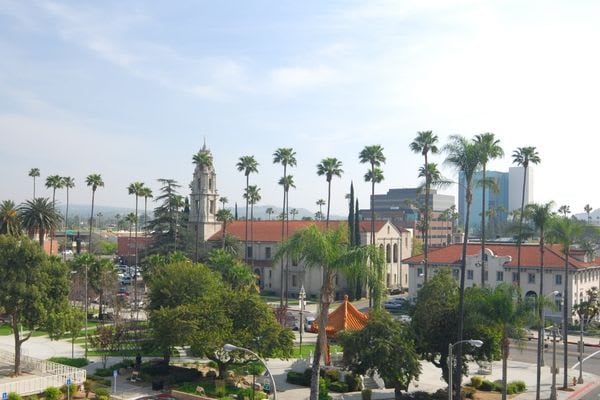
Some of Riverside’s most recognizable historic buildings reflect Mission Revival, Spanish Revival, and Spanish Colonial Revival design. The city’s preservation materials describe features like stucco walls, red tile roofs, arches, and related forms. These details give many properties a warm, classic Southern California look.
You can see these influences in well-known landmarks like the Mission Inn, Fox Theater, Municipal Auditorium, and First Congregational Church. Even if you are focused on residential real estate, these public landmarks help define the city’s visual identity. They also shape how many buyers think about Riverside as a place with real architectural personality.
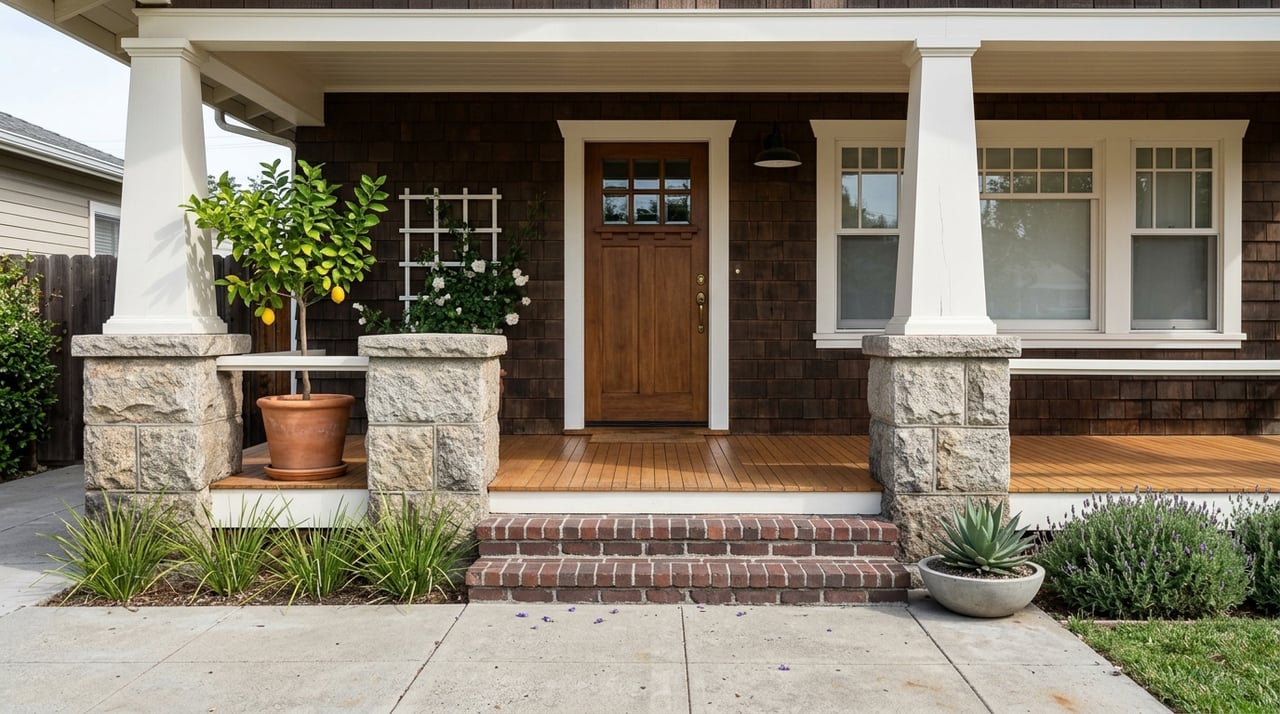
If you picture a charming older Riverside home, there is a good chance you are imagining a Craftsman or California Bungalow. The city describes Craftsman architecture as a response to more decorative Victorian styles, with low-pitched roofs, wide eaves, exposed rafters, and natural materials. These homes often feel practical, welcoming, and full of detail without looking overdone.
In Riverside, this style shows up especially well in neighborhoods like Wood Streets and Casa Blanca. These early-20th-century homes continue to define the look and feel of many streets. For buyers who want original character, these areas often attract attention quickly.
Riverside is not just about bungalows and Spanish-inspired design. In Ramona, the city highlights Victorian and Mission Revival landmarks, including Heritage House, a Queen Anne Victorian mansion. That adds another layer to Riverside’s architectural story.
You can also spot mid-century influence in parts of the city, especially in commercial and civic areas. Magnolia Center’s Brockton Arcade, which opened in 1956, is one example the city points to as still showing much of its original Mid-Century Modern character. Downtown also mixes modern architecture with older styles, which gives Riverside a more varied streetscape than many buyers expect.
Wood Streets is one of Riverside’s best-known historic residential areas. The city says the neighborhood was once orange groves and began to develop after a 1913 arroyo crossing opened the area for subdivision. Over time, it became a cohesive early-20th-century neighborhood with mature landscaping and narrow streets.
Riverside designated Wood Streets as a Neighborhood Conservation Area in 1981 and as a Historic District in 1986. For buyers, that history adds context to the homes themselves. For sellers, it helps explain why the area continues to have lasting appeal.
Downtown Riverside offers one of the city’s broadest mixes of architecture. According to the city, the area includes more than a dozen National Register historic sites and more than thirty city-designated landmarks. Styles range from Spanish Colonial Revival and Mission Revival to California Bungalow, Beaux Arts, and modern architecture.
Downtown also keeps a strong old-city-center feel. Public institutions, landmark buildings, and pedestrian-friendly streets all sit close together. If you want a quick way to understand Riverside’s historic identity, downtown is one of the best places to start.
Several other Riverside neighborhoods add important pieces to the city’s historic picture. Ramona is known for Victorian and Mission Revival landmarks, while Victoria is described by the city as an old and historic neighborhood centered on Victoria Avenue and Rockledge. Each area reflects a different chapter of local growth.
Eastside remains largely residential, with most homes built before the 1950s, and the 1904 Union Pacific Depot serves as a Mission Revival anchor. Casa Blanca features many early-20th-century homes, especially California Bungalows. Magnolia Center highlights a later postwar layer through spots like the Brockton Arcade and nearby commercial corridors.
Riverside’s historic homes make more sense when you see them in the context of the city’s landmarks. Places like the Mission Inn, Heritage House, Riverside County Courthouse, First Congregational Church, Victoria Avenue, Benedict Castle, and the Parent Navel Orange Tree connect architecture to citrus history, civic growth, and local identity.
For buyers, these landmarks can help you understand what gives Riverside its sense of place. For homeowners, they reinforce why older properties here often feel like part of a larger story instead of stand-alone houses. That connection is a big part of Riverside’s appeal.
If you are considering an older home, it helps to know how Riverside defines historic resources. The city recognizes four local designation types: City Landmark, Structure of Merit, Historic District, and Neighborhood Conservation Area. Those categories can affect how a property is reviewed and maintained over time.
The city also says that age alone does not decide whether a home is historic. Fifty years is a guideline, not a strict cutoff, and a property of any age can qualify if it meets the criteria. That is why it is smart to look beyond the year built and check the property’s actual designation status.
Riverside maintains a Historic Resources Inventory Viewer that buyers and owners can use to see whether a property is designated or may be eligible for review. This is one of the most important steps when you are evaluating an older home. It can help you understand possible requirements before you plan changes.
Buying a historic or older home in Riverside can be rewarding, but it also takes a little more homework. A standard home inspection is still essential, and older homes may need extra attention for age-related issues. That can include materials, systems, and maintenance items that are more common in older construction.
If a property is designated or eligible for designation, Riverside says exterior alterations, additions, and repairs require a Certificate of Appropriateness. In some cases, review may apply even when the work does not require a building permit. That is a key detail for buyers who want to remodel soon after closing.
Lead-safe planning also matters in older homes. Homes built before 1978 are more likely to contain lead-based paint, and while intact paint is usually not a problem, renovation work can create hazardous lead dust. If you are considering updates, it is wise to factor safe renovation practices into your budget and timeline.
Owning a qualified historic property in Riverside may come with helpful programs. The city participates in the Mills Act, which it describes as California’s key economic incentive for historic preservation. For owners who actively restore and maintain qualified historic properties, that can mean property tax relief.
Riverside also points to the State Historical Building Code as a tool for qualified historic buildings. This code provides alternative regulations for repairs, alterations, additions, and related reuse work. In practical terms, that can make preservation work more manageable in certain situations.
These programs do not remove the need for planning and review, but they can make stewardship more realistic for some owners. If you are comparing an older home with a newer one, this is one area worth looking at carefully. The right property may offer both character and long-term value.
Historic homes in Riverside appeal to buyers for more than curb appeal. Many people are drawn to the combination of established streets, mature landscaping, architectural detail, and a stronger sense of place. In Riverside, those qualities often come together in a way that feels hard to replicate in newer construction.
That said, character usually comes with added responsibility. Older homes can require more maintenance, more research, and more awareness of local review rules. Buyers who go in with a clear plan often have the best experience because they understand both the charm and the commitment.
If you are weighing a move in Riverside, historic homes deserve a close look. They can offer a lifestyle that feels rooted, distinctive, and connected to the city’s long story. And if you want help comparing neighborhoods, understanding property history, or deciding whether an older home fits your goals, Diana Renee is here to help.

Diana Renee
I am so fortunate to have grown up in one of the most wonderful places in the world, California. With friendly people, incredible weather, great entertainment, beaches, mountains and the desert all within driving distance, SoCal has it all. I was born and raised in Long Beach, and have lived in Corona since 1996. I truly love this city and I'm proud to assist my clients in navigating the process of buying and selling real estate.
Stay up to date on the latest real estate trends.
September 28, 2026

Lifestyle
September 25, 2026
September 25, 2026
September 21, 2026
September 18, 2026
housing market
September 16, 2026
September 14, 2026
housing market
September 9, 2026

Buying & Selling
September 9, 2026
I WANT TO HEAR FROM YOU