Inside a Strategic Listing Consultation for Corona Sellers
July 9, 2026
July 9, 2026
If you are thinking about selling your Corona home, your listing consultation is not just a quick meeting about price. It is the planning session that can shape how your home is positioned, prepared, marketed, and disclosed from day one. In a market where Corona homes may sell around asking price and timelines can vary depending on the data source, a strategic consultation helps you move forward with clarity instead of guesswork. Let’s dive in.
Corona is a large suburban city in western Riverside County with more than 160,000 residents, and about 63% of homes are owner-occupied according to the city profile. That matters because you are often competing in a market shaped by owner-occupant expectations around condition, pricing, and presentation. Buyers are not only comparing square footage and lot size, but also how confidently a home feels ready for the market.
Spring 2026 market snapshots also show why broad averages should be used carefully. Zillow reported an average home value of $764,199, 525 homes for sale, and a median 24 days to pending, while Redfin reported a median sale price of $799,522 and 44 days on market over a different time frame ending in May 2026. Realtor.com described Corona as a balanced market in May 2026, with homes selling for about asking price on average.
That mix of data tells you something important. A strong listing consultation should not rely on one portal estimate or one headline stat. Instead, it should focus on your neighborhood comps, nearby active listings, and recent closed sales that match your home more closely.
A true strategy session should leave you with a working plan, not just a suggested list price. For most Corona sellers, the most useful outcome is a roadmap that covers pricing, home prep, marketing assets, timing, and disclosures.
Here is what that process should usually cover:
When each of those pieces is discussed early, you can make decisions with less stress and fewer surprises.
One of the biggest goals of a listing consultation is to turn market data into a pricing strategy that fits your home and your goals. In Corona, that means using recent closed sales as the starting point, then testing that range against current active listings and your desired timeline.
If you want to sell quickly, pricing needs to reflect today’s competition, not last season’s peak. If you have more flexibility, you may still want a sharper strategy that protects your negotiating position without pricing beyond what buyers are seeing in the market. In a balanced or near-balanced market, precision matters.
This is also where local expertise becomes valuable. Two homes with similar square footage can perform very differently based on condition, updates, lot characteristics, layout, and how they compare to what is available right now. A strategic consultation should explain the reasoning behind the price range so you understand the tradeoffs before the home goes live.
Online valuation tools can be useful for an early snapshot, but they are not a pricing plan. The research shows that major portals reported different Corona numbers in spring 2026 because they used different metrics and time windows.
That is why your consultation should go beyond a single estimated value. The better question is not, “What does a website say my home is worth?” It is, “How will my home stack up against what buyers can tour today and what has actually closed nearby?”
Many sellers start thinking about a move months before listing. Zillow’s timing research says the typical seller thinks about selling for three to four months before putting a home on the market, while Realtor.com found that 53% of sellers prepared their home in one month or less.
Those numbers highlight a common challenge. Sellers often want to move quickly, but the best results usually come from starting the planning process before the ideal listing date is close.
A consultation should help you build a realistic timeline for:
When you know the steps upfront, you can avoid a rushed launch that leaves money or momentum on the table.
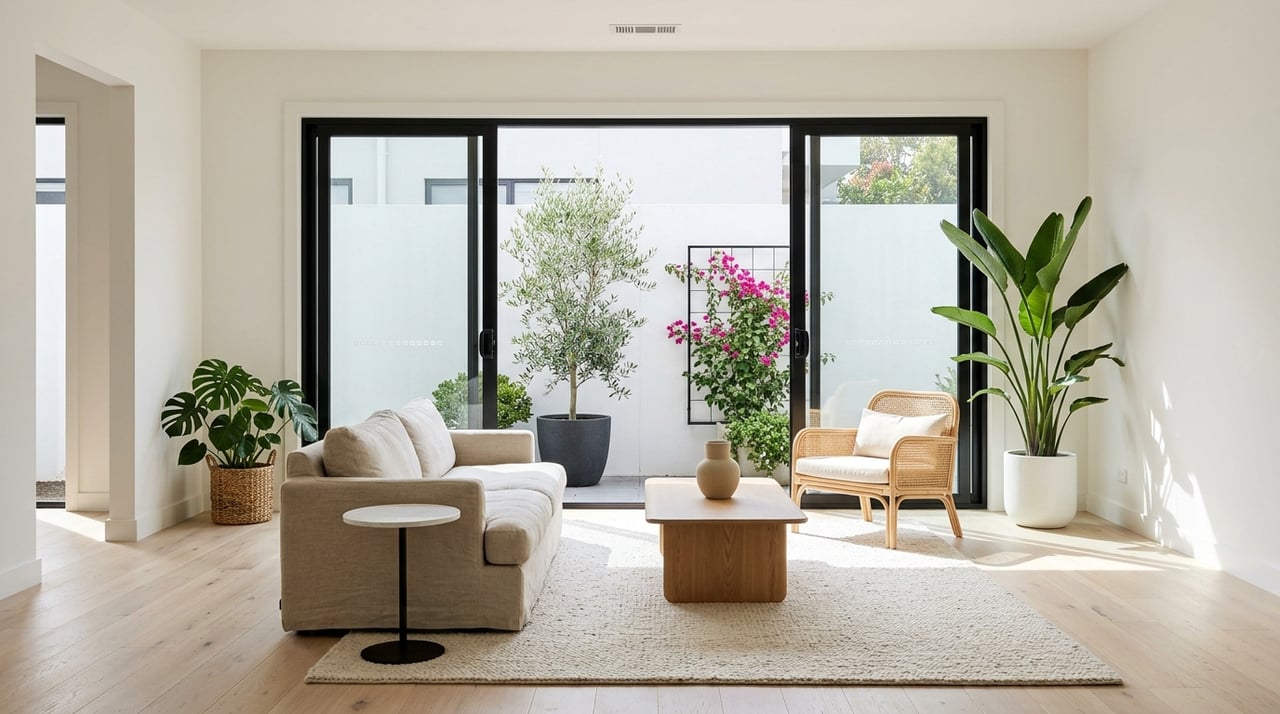
Staging is not just about making a home look nice in photos. It is about helping buyers understand the space and feel more confident about the home when they see it online and in person.
According to NAR’s 2025 staging report, 83% of buyers’ agents said staging makes it easier for buyers to visualize a property as a future home. The same report found that 17% of buyers’ agents saw staged homes increase the dollar value offered by 1% to 5%, and 30% of sellers’ agents reported slight decreases in time on market when a home was staged.
For many Corona sellers, that means your consultation should include a practical conversation about what to do before photos and showings. You may not need a full redesign. You may just need a focused plan that highlights the rooms buyers notice most.
The staging report found that the most commonly staged rooms were:
A strategic consultation should help you decide where effort will have the most impact. Sometimes that means removing extra furniture, editing decor, refreshing lighting, or improving flow. Sometimes it means identifying repairs or cosmetic updates that should happen before the marketing starts.
A good consultation should also answer a key seller question: How will my home actually be marketed? Broad promises are not enough. You should know what assets will be created and how the launch will be executed.
NAR’s 2025 technology survey found that real estate professionals most commonly use eSignature, social media, and drone photography or video, with social media ranking as the top lead-generating technology. For sellers, that points to the importance of a complete marketing package rather than a simple listing upload.
Your consultation should outline a clear plan for:
For a team like Diana Renee Homes, this is where local knowledge and systemized marketing can work together. The goal is to make sure your home enters the market with strong visuals, clear positioning, and a coordinated rollout.
In California, disclosures are not something to leave until the last minute. A strategic listing consultation should identify the property-specific items that need to be gathered early so your launch plan stays on track.
California requires a Transfer Disclosure Statement for most 1-to-4 unit residential sales. The California Department of Real Estate states that this disclosure is about the property’s condition, not a warranty, and it must be delivered before title transfer. If it is delivered after the buyer has signed, the buyer generally has 3 days after personal delivery or 5 days after mail delivery to terminate.
The same guidance states that listing and selling brokers must conduct a reasonably competent and diligent visual inspection to disclose material facts affecting value, desirability, and intended use. That makes early review especially important.
Depending on the property, your consultation may also need to cover:
For HOA properties, California guidance says sellers must provide items such as CC&Rs, bylaws, other governing documents, current budget and reserve information, and a statement about delinquent assessments before the buyer commits. If your home is in a common-interest development, document collection should start early.
By the end of a strong listing consultation, you should feel like you have a plan you can act on. Not a pile of general advice, but a clear path from today to launch day.
That plan should usually include:
In Corona, where current market conditions point to the importance of condition, pricing precision, and launch execution, this kind of preparation can make the selling process feel much more manageable.
If you are considering a move, starting early gives you more options. It gives you time to prepare thoughtfully, price strategically, and launch with confidence instead of rushing to catch up.
When you are ready to map out your sale, connect with Diana Renee for a consultation built around local Corona insight, modern marketing, and a step-by-step plan tailored to your home.
Before launch, your marketing plan should ideally cover professional photos, video, aerial imagery where appropriate, virtual tours, listing copy, and a clear rollout timeline.
Discover More About Life in Corona
Thinking about making a move, exploring neighborhoods, or simply staying connected with the community? Visit Explore Corona for local insights, neighborhood guides, community events, market updates, and everything you need to know about living in Corona, California.
👉 Explore Corona: https://explorecorona.com/home/

Diana Renee
I am so fortunate to have grown up in one of the most wonderful places in the world, California. With friendly people, incredible weather, great entertainment, beaches, mountains and the desert all within driving distance, SoCal has it all. I was born and raised in Long Beach, and have lived in Corona since 1996. I truly love this city and I'm proud to assist my clients in navigating the process of buying and selling real estate.
Stay up to date on the latest real estate trends.
Home Seller
October 2, 2026
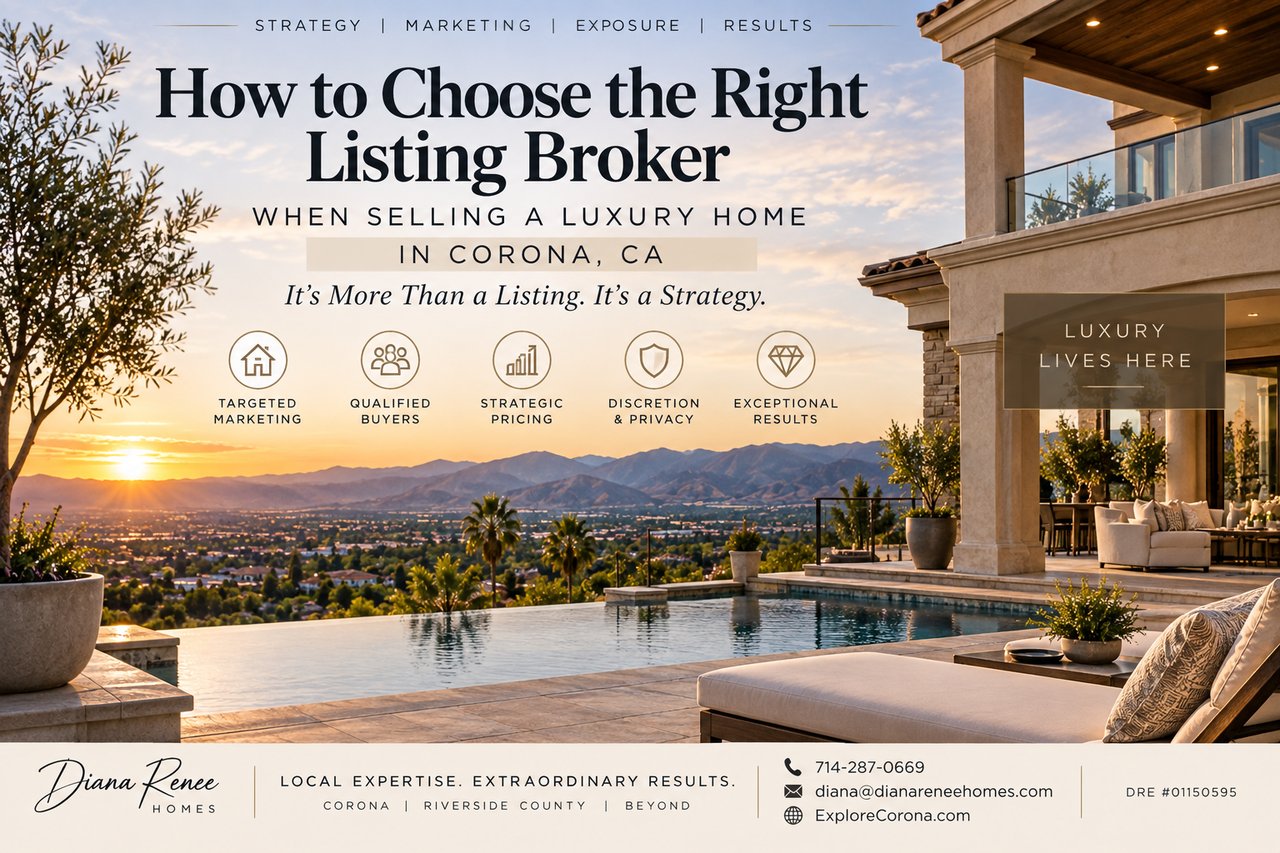
A Smarter Approach to Pricing, Marketing, and Positioning Your Corona Luxury Home for the Right Buyers
October 1, 2026
housing market
September 30, 2026
September 29, 2026
Exploring the remarkable Sycamore Creek neighborhood, one of Corona's most sought-after planned communities.
September 28, 2026
Lifestyle
September 25, 2026
September 25, 2026
September 21, 2026
September 18, 2026
I WANT TO HEAR FROM YOU