Selling a Horse Property in Norco: Local Owner Guide
June 5, 2026
California
June 5, 2026
California
Thinking about selling a horse property in Norco? You are not listing a typical suburban home, and that matters more than many owners realize. Buyers in Norco often look beyond the house itself to how the land functions, how the horse setup works, and how the property fits the city’s equestrian lifestyle. This guide will help you focus on the details that can shape pricing, preparation, and marketing so you can sell with more confidence. Let’s dive in.
Norco is built around an equestrian and rural lifestyle, not a standard tract-home model. The city identifies itself as Horsetown USA and highlights animal-keeping, more than 400 acres of parkland, and an extensive horse-trail network that supports riding, exercise, and community circulation.
That local identity shows up in the way many residential areas are designed. Neighborhoods often include equestrian trails, trail fencing, larger lots, parks with horse-friendly amenities, and permanent animal-keeping areas. When you sell in Norco, you are often selling a lifestyle system, not just a home on a big lot.
Norco’s planning framework is centered on protecting and enhancing animal-keeping and small-plot agriculture. The city’s general plan notes that many single-family agricultural and residential lots are generally at least 20,000 square feet, while some agricultural districts require 40,000 square feet or even 10 acres.
The city also points to 200-foot lot depth as a feature that helps support large animals and small-plot agriculture. That means buyers are often evaluating your property based on layout, usability, and horse function as much as interior finishes.
A large part of Norco’s residential acreage is zoned A-1-20, with a minimum lot size of 21,780 square feet. Other land-use categories have different standards, which is why a horse property should not be compared too closely with a smaller lot that lacks similar zoning or utility.
If you want a realistic pricing strategy, you need comparable sales that reflect more than bedroom count and square footage. Lot size, zoning, access, frontage, and horse infrastructure can all influence how buyers see value.
In March 2026, Norco’s citywide median sale price was $855,000, with a median of 56 days on market and 17 homes sold. But those numbers do not tell the whole story because Norco can vary meaningfully by neighborhood.
For example, Norco Ridge Ranch posted a median sale price of $1.4 million and about 40 days on market, while Norco Farms was around $859,000 and roughly 59.5 days on market. That difference is a good reminder that micro-location can matter just as much as the home itself.
Spring 2026 feature data for Norco suggest that buyers responded well to land-friendly and ranch-oriented characteristics. Features associated with stronger sale-to-list ratios included one-story layouts, high ceilings, ranch style, barns, fruit trees, and new kitchens, with sale-to-list ratios in the range of about 98.3% to 98.8%.
That does not mean every home with a barn or fruit trees sells at the top of the market. It does suggest that authentic features tied to Norco living should usually be highlighted, not downplayed.
Norco’s development standards describe the local architectural character as agrarian rather than suburban. The city favors simple farmhouse, barn, and stable-inspired forms, along with covered porches, open front porches, natural materials, and rustic but understated details.
For sellers, that is an important clue. A property that feels true to Norco’s rural identity may connect more naturally with buyer expectations than one presented in a way that feels overly urban or disconnected from the setting.
Preparation in Norco should start with function, safety, and presentation. Buyers want to quickly understand how the property works for daily horse use, storage, movement, and access.
The goal is not to create a theme. The goal is to make the property feel clean, organized, usable, and true to its purpose.
In Norco, trail frontage is part of the ownership experience. The city’s trail-maintenance guidance says that most property owners are responsible for keeping adjacent trails and right-of-way areas free of weeds and trash unless the property is in an LMD.
Before listing, clean up the trail edge, trim overgrowth, remove debris, and make sure fencing and gates look maintained. Buyers may view the property from the street and from the trail, so both perspectives matter.
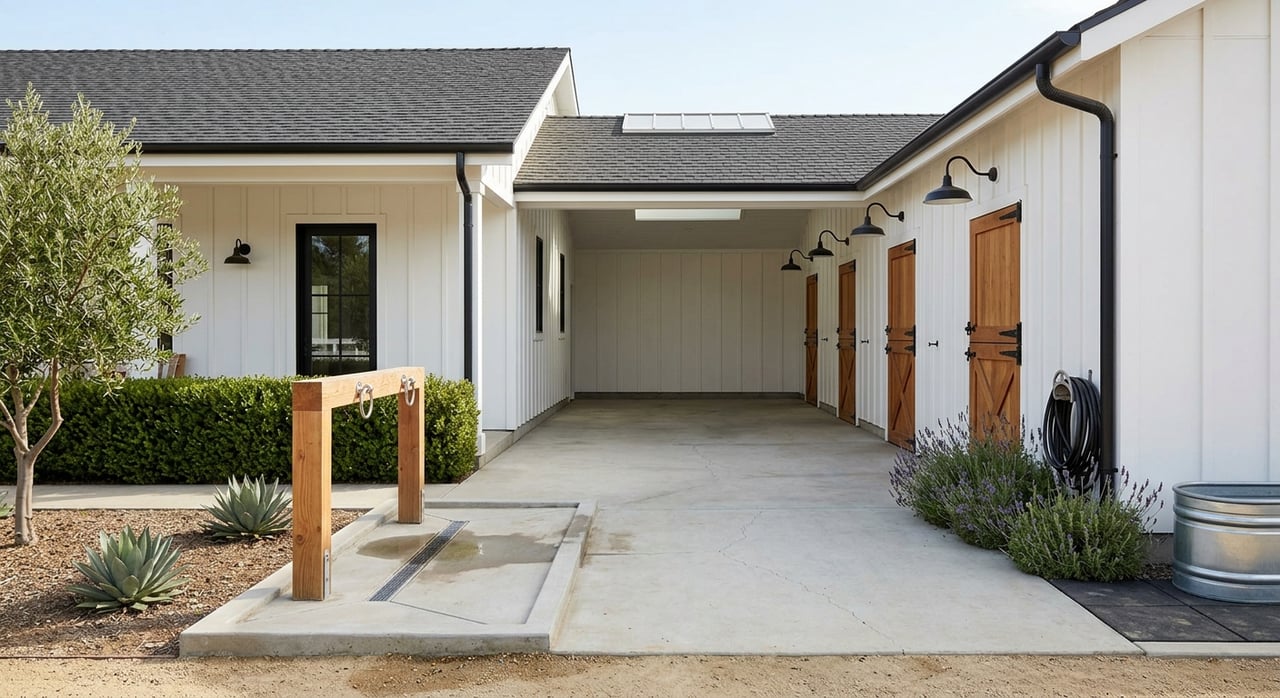
Your setup should be simple to understand at a glance. Buyers should be able to see where the barn, stalls, corrals, turnout, tack or feed storage, and riding access are located without guessing.
If the layout feels confusing, the property can seem less functional than it really is. Clear organization helps buyers picture their own routine on the property.
Norco’s public equestrian facilities include open arenas and staging areas at places such as Basin Arena, Corydon Staging Area, Hawks Crest Park Arena, Norco Hills Park Arena, Pacer Park Arena, Ridge Ranch Park Arena, Ted Brooks Park Arena, and the arenas at Ingalls Event Center. Several include corrals or hitching posts.
That local context matters because it reflects the kinds of practical amenities buyers are used to seeing in this community. At home, visible horse infrastructure, safe access paths, usable footing, organized stalls or corrals, and practical trailer parking or turnaround space can all strengthen your presentation.
Before you list, focus on the features buyers are most likely to notice first:
The strongest marketing for a Norco horse property combines function with lifestyle. Buyers want to know what the home offers, but they also want to understand how it fits into daily living in Norco.
That means your marketing should go beyond room counts and upgraded finishes. It should show how the property supports horses, land use, and the broader equestrian setting.
Norco says its trail system supports riding to commercial areas, exercise, and connections throughout the community. That is not a small detail. It is part of what makes the city different from nearby resale markets.
If your property benefits from trail frontage or easy riding access, that should be part of the listing story. Buyers often respond more strongly when they can picture how the property connects to the local trail network and the city’s equestrian identity.
Horse-property marketing needs strong visual storytelling. Photos and video should show the trail frontage, fencing, gates, barn or stall layout, arena dimensions, turnout areas, and the route from the house to the horse space.
This helps buyers understand the property as a working environment, not just a parcel on paper. In a market like Norco, that difference can shape the quality of buyer interest.
If your property includes non-horse features that still fit the Norco lifestyle, they are worth mentioning. Fruit trees, ranch styling, one-story layouts, and high ceilings may all support buyer appeal based on local feature trends.
The key is to frame those features in a way that matches the property’s overall identity. A consistent story usually works better than a scattered list of upgrades.
Not all Norco properties sell the same way. Neighborhood-level variation in price and days on market means your marketing and pricing strategy should reflect the property’s exact setting.
That is especially important in a city where zoning, lot size, and equestrian function can differ meaningfully from one area to another. A careful local approach can help you avoid overpricing, underpricing, or presenting the property too generically.
Norco’s Equestrian Historic District covers about 6,000 residential properties and includes zones such as HS, OS, LD, A-E, and A-1. The city says the district celebrates and preserves Norco’s agricultural heritage and adds no new requirements beyond existing zoning regulations.
For sellers, that is helpful context. It reinforces that Norco’s equestrian character is a recognized market feature, not just a niche preference.
Norco also highlights events and places tied to its horse culture, including Norco Horseweek, the Norco Fair, the PRCA Rodeo, and the Ingalls Event Center. These local touchpoints help buyers understand they are buying into an established equestrian community, not simply purchasing a home with extra land.
That broader context can make your listing more compelling when it is presented clearly and factually.
The best approach to selling a horse property in Norco is to match your strategy to what buyers actually value here. That usually means pricing with the right comps, preparing the land and horse areas as carefully as the home, and marketing the property in a way that feels local and authentic.
When you do that well, you help buyers see the full value of what you own. In a market as distinct as Norco, that can make a meaningful difference in both interest and outcome.
If you are getting ready to sell and want a strategy built around local pricing, presentation, and marketing, connect with Diana Renee for expert guidance.
Discover More About Life in Corona
Thinking about making a move, exploring neighborhoods, or simply staying connected with the community? Visit Explore Corona for local insights, neighborhood guides, community events, market updates, and everything you need to know about living in Corona, California.
👉 Explore Corona: https://explorecorona.com/home/

Diana Renee
I am so fortunate to have grown up in one of the most wonderful places in the world, California. With friendly people, incredible weather, great entertainment, beaches, mountains and the desert all within driving distance, SoCal has it all. I was born and raised in Long Beach, and have lived in Corona since 1996. I truly love this city and I'm proud to assist my clients in navigating the process of buying and selling real estate.
Stay up to date on the latest real estate trends.
October 5, 2026
A Buyer’s Guide to Settling in Eastvale, CA.
October 5, 2026

Home Seller
October 2, 2026
A Smarter Approach to Pricing, Marketing, and Positioning Your Corona Luxury Home for the Right Buyers
October 1, 2026
housing market
September 30, 2026
September 29, 2026
Exploring the remarkable Sycamore Creek neighborhood, one of Corona's most sought-after planned communities.
September 28, 2026
Lifestyle
September 25, 2026
September 25, 2026
I WANT TO HEAR FROM YOU