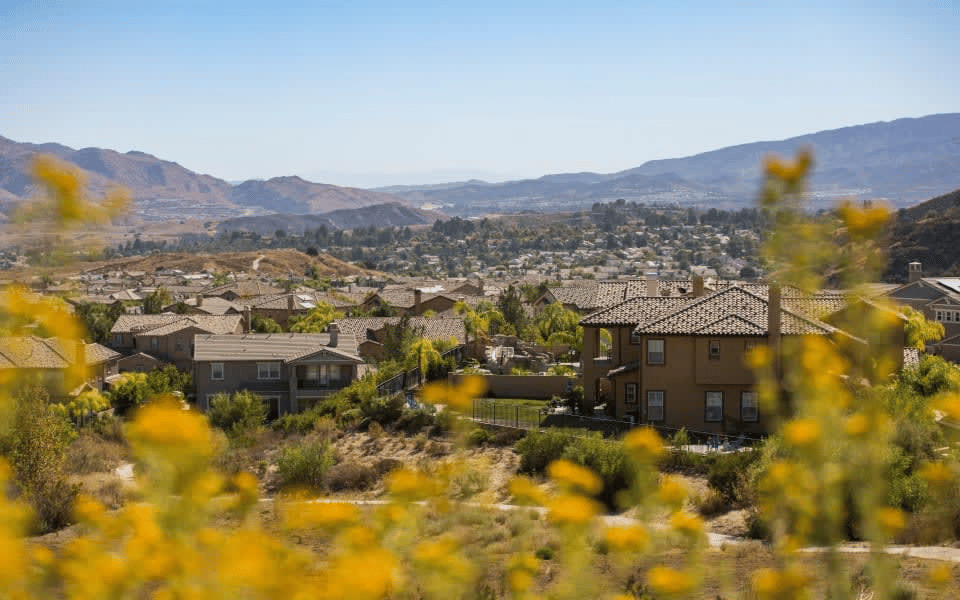
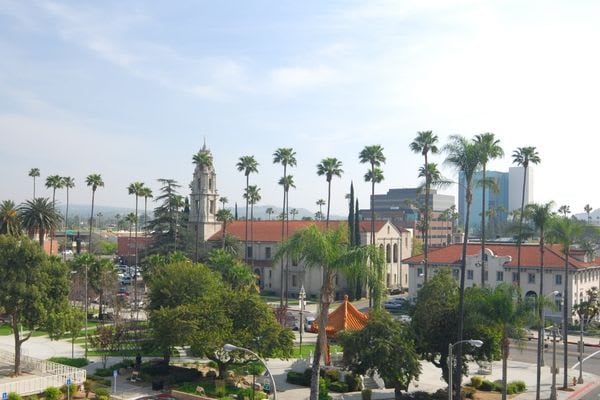
In Riverside's Wood Streets, the House Is Yours. The Windows Still Answer to the City.
September 24, 2026
September 24, 2026
Close of escrow feels like the finish line. The keys change hands, the sign comes down, and the house is now, legally and completely, yours to do with as you please. In most of Riverside, that's true. In the Wood Streets, on Mt. Rubidoux, or in any of the city's other locally designated historic districts, it's only half true. You own the walls, the roof, the lot. The exterior answers to a design review board first.
That distinction rarely shows up in a listing description, and it almost never shows up in a standard home inspection. It surfaces the first time a new owner calls a contractor about vinyl replacement windows, a chain link fence, or a fresh coat of paint on unpainted brick, and finds out the project needs a hearing before it needs a permit.
Riverside is a Certified Local Government under the California State Office of Historic Preservation, and it has 13 designated historic districts plus more than 3,000 individually recognized Structures of Merit and 153 City Landmarks citywide. Any property that carries one of those designations, or is old enough to be eligible for one, falls under Title 20 of the Riverside Municipal Code, the city's Cultural Resources Ordinance.
Here's the part that catches people off guard: the city's own guidance states plainly that a Certificate of Appropriateness is required for rehabilitation, alteration, demolition, relocation, or any change to a designated or eligible cultural resource, and that requirement covers alterations that don't require a building permit at all. Repaint the trim. Swap a porch railing. Put up a new fence. None of those trigger a trip to Building & Safety on their own, but inside a historic district, they can still trigger a review by the Cultural Heritage Board.
The city's design guidelines get specific about what that review looks for. Deteriorated materials should be repaired in place rather than replaced. Masonry that was originally unpainted should stay unpainted. Aluminum and vinyl replacement windows are strongly discouraged because the grid pattern sits between panes of glass instead of on the surface, which reads as wrong on a Craftsman or Spanish Revival facade even from the sidewalk. Chain link fencing is fine in a backyard nobody can see from the street, and a problem the moment it's visible from one.
That last detail is the tell. The rules aren't really about materials. They're about what's visible from the public right of way. The exterior of a historic district home functions, in a real sense, as shared civic property, even while the deed says otherwise.
There's also a quieter trap for buyers of older, undesignated homes: the city's rule of thumb is that any property over 50 years old may be eligible for historic designation whether or not it's ever been formally reviewed. If your property isn't on the Historic Resources Inventory, that doesn't mean it's cleared. It means nobody has checked yet.
The timeline math is where this becomes a transaction issue rather than a design preference.
| Step | Typical Timeline |
|---|---|
| Standard residential building permit | 4 to 6 weeks |
| Cultural Heritage Board historic review (Certificate of Appropriateness) | Adds 4 to 6 weeks on top |
| Combined timeline for an exterior project inside a historic district | Roughly 8 to 12 weeks |
A buyer who plans to close in June and repaint the porch by August is, in practice, planning around a review board's meeting calendar, not just a contractor's schedule.
Riverside's most visible piece of evidence for how seriously this gets enforced sits at 1510 University Avenue, the Peter J. Weber House. Decades ago, a hotel chain wanted to demolish the landmark home to build a parking lot. The Cultural Heritage Board didn't approve it. Instead, the hotel was built around the house, and the Weber House still stands today as the headquarters and basecamp for the Old Riverside Foundation's annual Vintage Home Tour, which drew its 33rd running this past May under the theme "Age is a Work of Art," tying the event to the national semiquincentennial.
The Old Riverside Foundation, a nonprofit that has advocated for the city's historic housing stock since 1979, put real numbers behind that mission this year. Roughly $15,000 in Vintage Home Tour ticket revenue funds the Foundation's Restoration Grant program, which awards up to $2,500 at a time to members repairing historic homes, with a preference for work that's visible from the street. The pattern holds all the way through: the city cares about what the sidewalk sees, and it has a nonprofit partner willing to help pay for getting it right.
None of this exists to make ownership harder for its own sake. The Mills Act, a state law dating to 1972, gives cities the authority to enter into contracts with historic property owners who commit to active restoration and maintenance, in exchange for a reduction in property taxes. Riverside participates, and city planning describes it as the single most important economic incentive program in California for private historic preservation.
The detail that matters at the transaction table is timing. Riverside only accepts Mills Act applications between January 1 and May 31 each year. A buyer who closes in July has a nine-month wait before the application window even opens again. For someone weighing the added review burden of a historic district against the long-term tax benefit, that calendar gap is worth factoring into the first year's budget, not discovering after the fact.
Riverside's citywide historic district design standards were adopted in 2003, before accessory dwelling units became the state-mandated by-right addition they are today under current California law. The city has acknowledged that those 2003 standards don't fully address the practical questions that come up when someone wants to add a detached ADU behind a designated Craftsman bungalow, which is why planning staff commissioned a separate set of guidelines specifically for ADUs on historic properties.
For an investor eyeing a Wood Streets property for rental income potential, that's worth knowing before the offer goes in. The path to an ADU on a historic parcel exists, but it runs through a design review process built for a policy question the original 2003 rules never anticipated.
A few practical habits protect both sides of a historic district transaction:
Does this apply if my house isn't officially a "landmark"? It can. Contributing structures within a historic district, and properties old enough to be eligible even without formal designation, fall under the same review requirement for exterior changes.
What if the work doesn't need a building permit at all? The Certificate of Appropriateness requirement still applies. City guidance is explicit that this includes alterations that wouldn't otherwise require a permit.
Can a Cultural Heritage Board decision be appealed? Yes. Decisions can be appealed to the Riverside City Council.
Is the extra process worth it financially? For many owners, the Mills Act tax reduction offsets the added review time over the life of ownership. The trade-off is more attractive for someone planning to stay and restore than for someone planning a quick exterior refresh and resale.
Buying or selling a historic property in Riverside isn't a reason to walk away from the Wood Streets or Mt. Rubidoux. It's a reason to ask different questions before the contingency period runs out. Diana Renee and her team work these transactions regularly and can help you time a purchase, a listing, or a renovation around what the Cultural Heritage Board actually requires, not just what the county permit desk does.
Want to know what it's really like to live in Corona? From local events and hidden gems to neighborhood guides and community updates, I put it all together at ExploreCorona.com, your insider's guide to everything this city has to offer.

Diana Renee
I am so fortunate to have grown up in one of the most wonderful places in the world, California. With friendly people, incredible weather, great entertainment, beaches, mountains and the desert all within driving distance, SoCal has it all. I was born and raised in Long Beach, and have lived in Corona since 1996. I truly love this city and I'm proud to assist my clients in navigating the process of buying and selling real estate.
Stay up to date on the latest real estate trends.
September 24, 2026

Home Seller
September 23, 2026

Home Buying
September 23, 2026

Buying & Selling
September 21, 2026
September 21, 2026
September 18, 2026

housing market
September 16, 2026
September 14, 2026

housing market
September 9, 2026
I WANT TO HEAR FROM YOU